
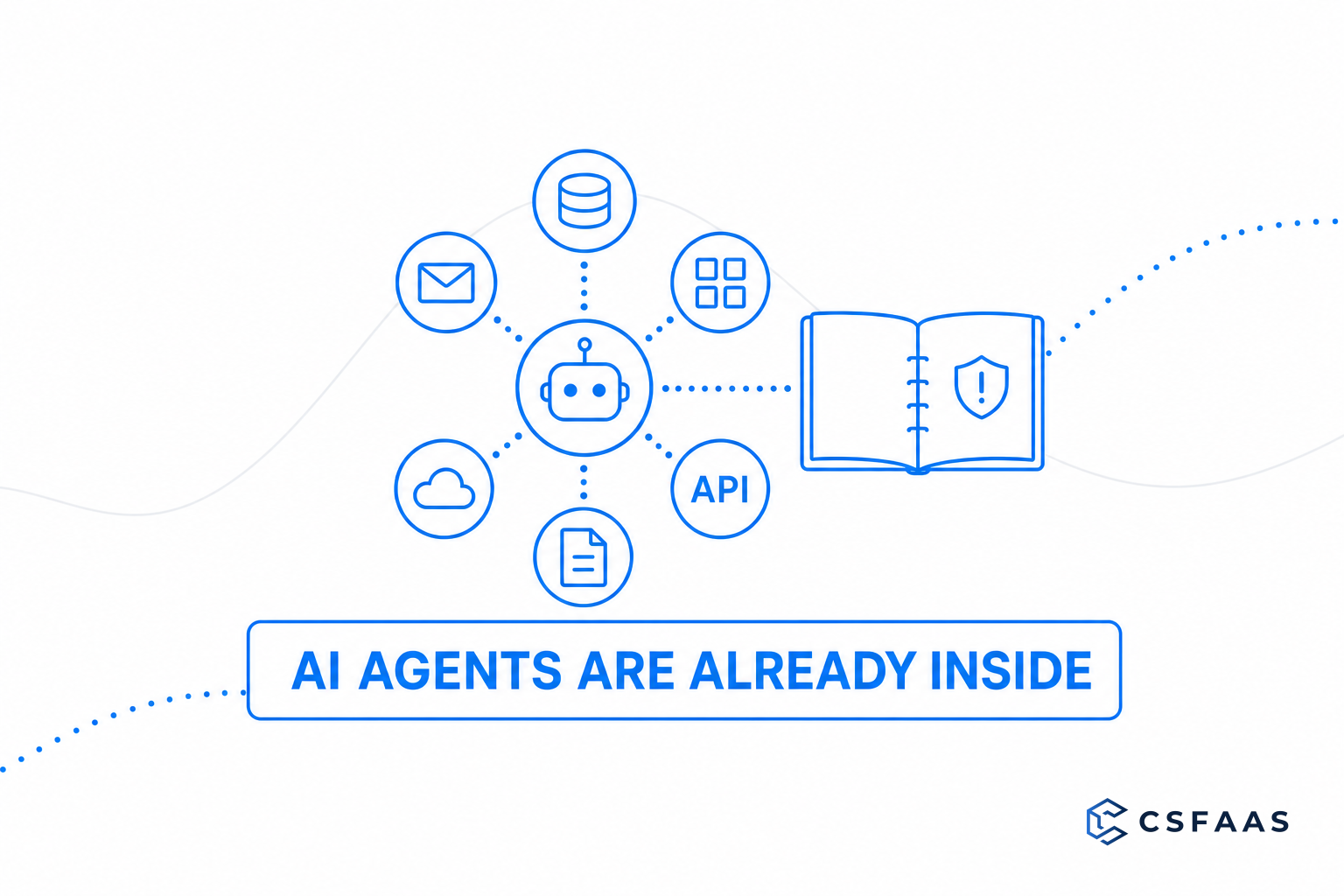
Artificial intelligence is entering organizations faster than governance can follow.
Employees are no longer using AI only to generate text or summarize documents. AI agents can now access company data, interact with applications, call APIs, initiate workflows and, in some cases, make decisions with limited human intervention.
This changes the nature of the risk.
An AI agent is not simply another software tool.
It may operate across several systems, process sensitive information, rely on external providers and perform actions on behalf of the organization.
Yet in many companies, the basic governance questions remain unanswered:
Who approved the agent?
Who owns it?
What systems and data can it access?
What decisions is it allowed to make?
Which external services does it depend on?
How are its actions monitored?
What happens when it makes a mistake?
Without clear answers, organizations may be introducing new operational, cybersecurity, privacy and compliance risks without recording them anywhere.
The issue is not whether companies should use AI agents.
They will.
The real question is whether those agents are being governed with the same discipline applied to employees, applications, suppliers and critical business processes.
A practical governance approach should include, at minimum:
• An inventory of AI agents in use
• A clearly identified business owner
• A documented purpose and scope
• An assessment of accessible systems and data
• Defined limits on autonomy and permitted actions
• Security, privacy and third-party risk assessments
• Logging and monitoring of agent activity
• Periodic review and decommissioning procedures
Boards and executive teams do not need to understand every technical detail of an AI agent.
But they should know where agents are operating, what authority they have and what risks the organization is accepting.
Because an AI agent that can access data and execute actions is not merely a productivity tool.
It is a new digital actor within the organization.
And if it is not visible in your governance framework, your system inventory and your risk register, it may already be operating outside your control.
Does your organization currently know how many AI agents it is using?
Sources & further reading
- NIST - AI Risk Management Framework
- NIST - Artificial Intelligence Risk Management Framework: Generative Artificial Intelligence Profile
- OWASP GenAI Security Project Releases Top 10 Risks and Mitigations for Agentic AI Security
- World Economic Forum - From chatbots to personal assistants: how governance is key to harnessing the power of AI agents