
Introduction
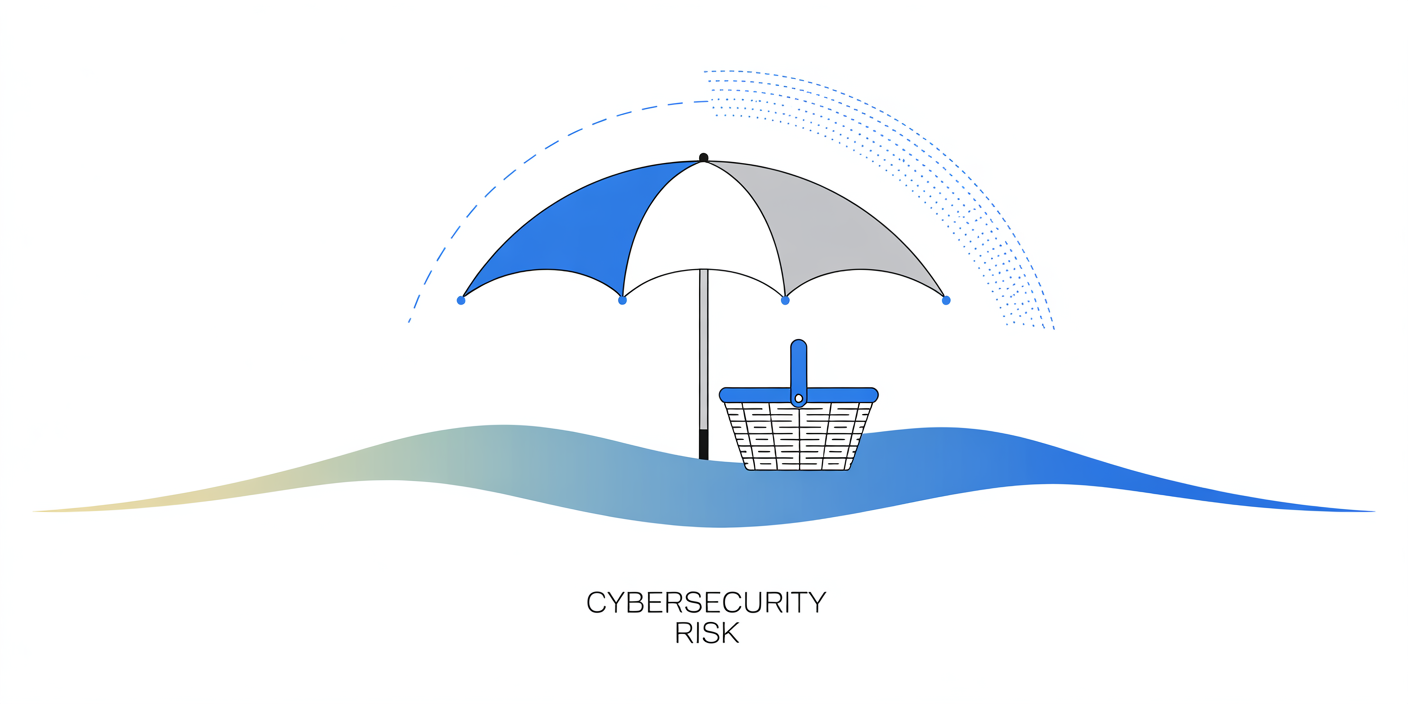
Explaining cybersecurity concepts to children or beginners can be challenging. However, using everyday scenarios can make these ideas more accessible. One of the most fundamental concepts in cybersecurity is understanding threat, vulnerability, likelihood, impact and risk. Let’s break it down with a simple example: a picnic and the risk of it being spoiled by rain.
The Picnic Scenario
Imagine you and your family are planning a picnic in the park. You have packed delicious food, a blanket, and some games to enjoy the day. Everything seems perfect. But what if it rains?
Breaking It Down:
1. Threat (The Rain)
A threat is something that has the potential to cause harm. In this case, the rain is the threat because if it starts to pour, it could ruin your picnic by soaking your food, clothes, and making the ground wet.
2. Vulnerability (No Protection)
A vulnerability is a weakness that can be exploited by the threat. If you go to the park without an umbrella, a tent, or any kind of shelter, you are vulnerable because you have no protection against the rain.
3. Likelihood (Probability of Rain)
Likelihood is the chance that the threat (rain) will occur. If the weather forecast predicts sunny skies, the likelihood of rain is low. However, if dark clouds are gathering, the likelihood increases. Similarly, in cybersecurity, the likelihood of a cyberattack depends on factors such as system weaknesses and the presence of active threats.
4. Impact (Consequences of Rain)
Impact refers to the severity of the damage caused if the threat materializes. If it drizzles lightly, the impact might be minimal—perhaps just a damp picnic blanket. But if there is a heavy downpour, the impact could be significant, leading to a completely ruined picnic with soggy food and an uncomfortable experience. In cybersecurity, the impact of an incident could range from minor inconvenience to severe financial and reputational damage.
5. Risk (A Ruined Picnic)
Risk is the likelihood of the threat (rain) exploiting the vulnerability (no protection) and causing harm (ruining the picnic). If you don’t check the weather forecast and don’t bring any rain protection, there is a high risk that your picnic will be ruined if it starts raining.
How to Reduce the Risk?
In cybersecurity, we reduce risk by implementing controls. Let’s apply this to our picnic scenario:
Check the weather forecast before going – this is a preventive control, helping you avoid getting caught off guard.
Bring an umbrella or set up a tent – this is like adding protective controls to shield yourself from the threat.
Choose a location with a covered area – this acts as a backup plan, similar to having redundancy or contingency measures in cybersecurity.
By taking these precautions, you reduce the risk because even if the threat (rain) occurs, you are prepared and protected… And the picnic can still be a success.
Cybersecurity and Risk Management
Now, let’s connect this to cybersecurity. In the digital world:
A threat could be a hacker trying to steal your data.
A vulnerability could be a weak password or an unpatched system.
The likelihood of an attack increases if security gaps exist.
The impact of an attack depends on how critical the compromised system is.
The risk is the possibility that the hacker exploits the weak password and gains access to your sensitive information.
Just like in our picnic scenario, reducing cybersecurity risks involves assessing threats, identifying vulnerabilities, and applying protective measures such as strong passwords, firewalls, and software updates.
NIST Definitions for a Professional Perspective
While the picnic analogy makes the concept easy to grasp, cybersecurity professionals use more precise terminology. To provide a more formal perspective, here are some key definitions from the National Institute of Standards and Technology (NIST):
Vulnerability
A vulnerability is a weakness in an information system, system security procedures, internal controls, or implementation that could be exploited by a threat source. Just like forgetting an umbrella makes you vulnerable to rain, a weak password makes a system vulnerable to hacking.
Risk
Risk is a measure of the extent to which an entity is threatened by a potential circumstance or event, and is typically a function of:
The adverse impacts that would arise if the circumstance or event occurs; and
The likelihood of occurrence.
Information security risks are those risks that arise from the loss of confidentiality, integrity, or availability of information or information systems and reflect the potential adverse impacts to organizational operations (i.e., mission, functions, image, or reputation), organizational assets, individuals, other organizations, and the Nation.
Similar to our picnic example, if you don’t take precautions, the likelihood of rain causing a problem increases.
Likelihood
The likelihood of occurrence is a weighted risk factor that analyzes the probability of a threat exploiting a vulnerability (or set of vulnerabilities). This likelihood combines an estimate of the probability that a threat event will be initiated with an estimate of the likelihood of its impact (i.e., the chance that the event will result in adverse effects).
For example, if dark clouds appear, the likelihood of rain increases, just like if a system is outdated, the likelihood of a cyberattack rises.
Impact
The effect on organizational operations, organizational assets, individuals, other organizations, or the Nation (including the national security interests of the United States) of a loss of confidentiality, integrity, or availability of information or a system.
In our analogy, the impact of rain could be a ruined picnic. In cybersecurity, the impact of a successful attack could be data loss or financial damage.
Conclusion
Understanding risk, threat, and vulnerability doesn’t have to be complicated. Simple, real-world examples like a picnic in the rain help illustrate the importance of preparation and protection.
Whether it’s shielding your picnic from rain or securing your data from cyber threats, the key is to anticipate risks and take steps to minimize them.
Next time you go on a picnic, think about cybersecurity – and don’t forget your umbrella! And to manage your picnic risk properly, open a free CSFaaS account today!